Photolithography (placeholder)
Ma-N 405
I found the specification details for the ma-N 405 photoresist. It's part of the ma-N 400 series, used mainly for microelectronics and systems technology. This resist allows for aqueous alkaline development and provides high wet and dry etch resistance. It's suited for conventional pattern transfer and single-layer lift-off processes, with film thickness at 0.5 µm when spin-coated at 3000 rpm (Micro Resist GmbH).
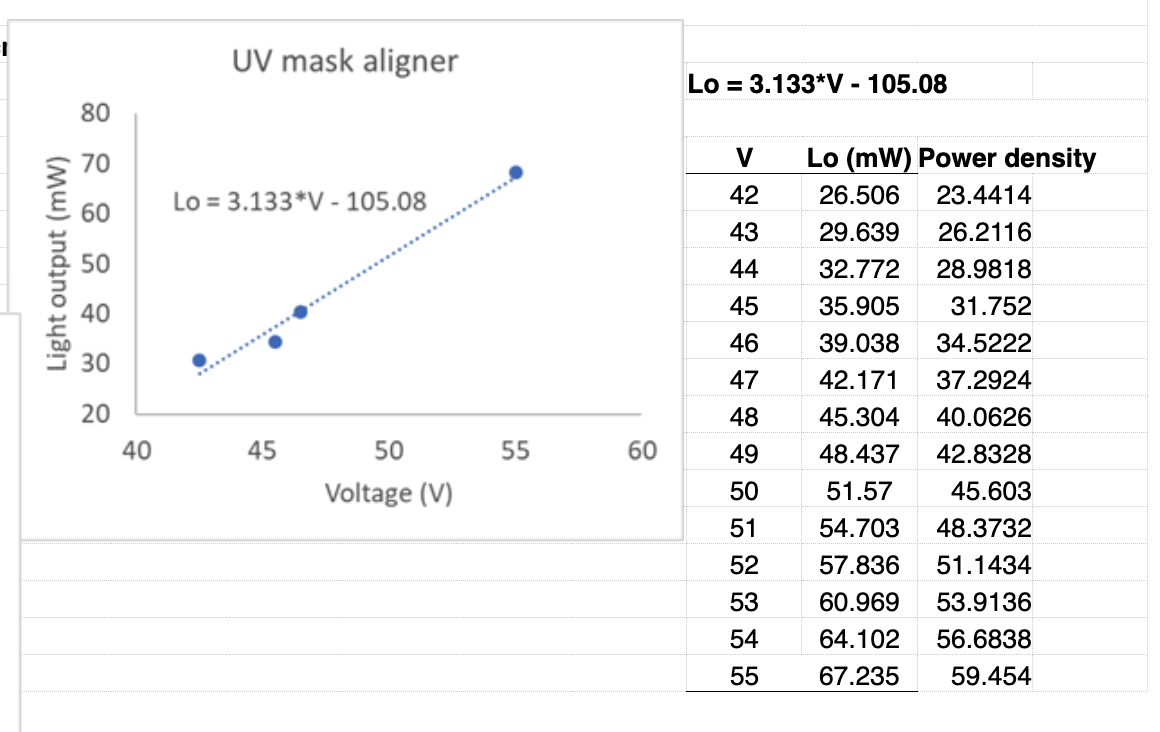
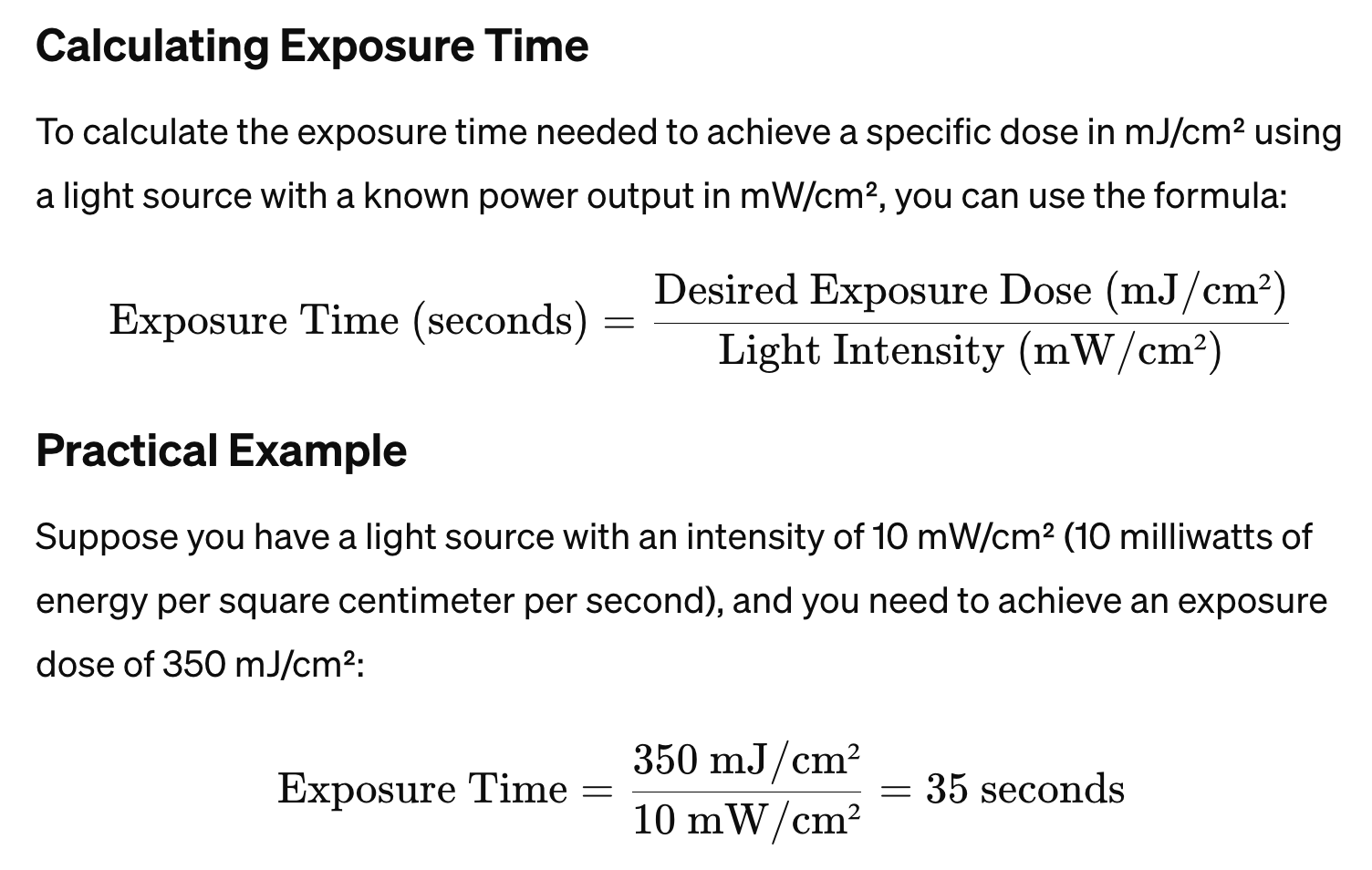
Light Output Exposure time: ma-N 405 Photoresist: For the ma-N 405 negative photoresist, the exposure dose is specified to be between 350 – 1900 mJ/cm² at 365 nm (i-line). This range gives flexibility depending on the depth and features of the pattern you're aiming for (Micro Resist GmbH).
MICROPOSIT S1800 Series Photoresists: Microposit S1800 G2 Series PDF Description: This series includes various photoresists like S1813, part of the S1800 series, which is widely used in microelectronics for its good resolution and adhesion. It's suitable for broad applications in semiconductor manufacturing, particularly for g-line and i-line photolithography.
Light Output Exposure time: MICROPOSIT S1800 Series Photoresists: The detailed exposure time and light output information can be found in this document. It outlines the exposure requirements depending on the specific type within the series, but generally, these resists are designed for i-line photolithography with typical exposure doses.
LOR C For LOR C, the spec sheet can be accessed directly from here, which provides comprehensive details on its characteristics and applications (Minnesota Nano Center).
Unfortunately, the details for LOR C weren't retrievable in the previous searches, and would likely require a direct consultation with the manufacturer or checking their specific product datasheets which might be available directly on their websites or through technical support.
MICROPOSIT MF-322 Developer: Characteristics: This is part of the MF-300 series, a metall-ionen-freier (metal ion free) developer with a normality of 0.268N, suitable for use with a wide range of positive photoresists including the MICROPOSIT S1800 series. It offers high throughput and wide process latitude (Micro Resist GmbH).
How long to Develop?
The detailed development time for MICROPOSIT S1800 series photoresists using MF-322 developer can vary depending on the specific process conditions and resist thickness. However, an example from a practical setting suggested development times of 10-12 minutes when using Microposit MF-322 developer. This was followed by rinsing in deionized water for about 2 minutes (A-Gas Electronic Materials).